Influencer Marketing: Your Guide for 2026
Influencer marketing

Influencer Marketing: Your Guide for 2026

Influencer marketing gives brands a decisive advantage: by partnering with creators, they reach their target audience through people they already trust, instead of losing budget to banner ad waste. At Ad Specialist, we have managed over 10,000 campaigns since 2018.

Reading time: approx. 24 min
Moritz Lambrecht
Moritz Lambrecht
July 8, 2026

The Key Points at a Glance

Influencer marketing gives brands a decisive advantage: by collaborating with creators, they reach their target audience through people they already trust, instead of having to accept wasted reach via banner ads. At Ad Specialist, we have managed over 10,000 campaigns since 2018. What we see time and again: influencer marketing is not a game of chance. It is a craft with specific tools. In this guide, we have bundled our practical experience: from choosing the right platform and realistic cost frameworks to KPIs that make every campaign measurable. We also explain our unique brandformance approach, which combines awareness and performance.

  • Influencer marketing uses the trust between creators and their community to place brand messages authentically and with precision.

  • Choosing the right creator type, from nano to mega, depends on your goals, budget, and target audience.

  • In influencer marketing, it is about selecting the right creators rather than chasing followers, clean tracking from the start of the campaign, and a budget split of around 60% creator fees, 20% paid amplification, and 20% for content rights plus management.

  • Measurability is a fundamental requirement in influencer marketing: with UTM links, promo codes, and tracking setups, you make ROI visible.

What influencer marketing actually delivers (and what it doesn’t)

Influencer marketing is about collaboration between brands and influencers who have built an engaged community. These content creators—whether on Instagram, YouTube, Twitch or TikTok—use their influence to authentically integrate products and services into their content. The trust that the influencer’s followers place in them is the direct route into the minds of your target audience. Compared with traditional advertising, they have a major advantage: The recommendation comes from a person the community already trusts. Today, 61 percent in a study by GetApp state that they are more likely to buy from a brand if it works with influencers.

Influencer marketing has an impact on several levels at the same time. This sets it apart from most other marketing channels. The basis for this is native content that does not feel like advertising and therefore often performs better than traditional ads. According to a Bitkom survey, 80 percent of companies already believe that influencers deliver more than traditional advertisements. An influencer campaign can move your brand forward in various ways.

More awareness

Creators reach millions of people every day in exactly the niches where you want to be visible. If someone discovers your brand through a creator they already follow and trust, they perceive it differently than via a traditional display banner. Brand search uplift—specifically, the increase in searches for your brand after a campaign—is one of the strongest indicators that influencer marketing generates awareness.

Improved image

The context in which your brand appears influences perception. A creator who authentically shows enthusiasm for your product and integrates it into their everyday life conveys values and emotions that you can hardly access with traditional advertising. Through long-term collaborations and working with brand ambassadors, you can strengthen this effect even further, because repeated, natural visibility creates trust and sympathy and therefore important social proof.

Better performance

The persistent prejudice that influencer marketing is purely an awareness channel still remains. Any professional influencer agency will dispute that: With the right KPIs, a clear tracking setup and creators who fit your target audience, you can achieve clearly measurable results. At Ad Specialist, we call this brandformance, because awareness and performance are mutually dependent. If you are visible today, you create measurable conversion signals tomorrow.

Why does it work?

Behind the success of creator marketing are several structural advantages that set it apart from other channels.

  • Authenticity & trust: Creators have often built their community over many years. The trust placed in them is transferred to recommended products.

  • Niches with an active audience: Whether gaming, financial advice or sustainability: There are suitable creators for every niche. This allows you to address target audiences far more precisely than with traditional ad targeting.

  • Native content: Content from influencers appears naturally in people’s feeds. It feels less like advertising and therefore bypasses the typical perception filters that users have developed toward traditional ads over the years.

  • Storytelling: Creators integrate your brand into stories from their real lives. This creates relevance and memorability that your product portfolio can hardly achieve.

  • Cost efficiency: Micro and nano influencers in particular offer very good value for money, even for smaller brands. You reach engaged communities at a CPM that is usually significantly lower than that of traditional display campaigns.

What influencer marketing does not deliver

Unlike traditional performance ads, influencer marketing rarely delivers immediate sales spikes. However, conversions continue to come in months after the placement, especially on platforms such as YouTube and Twitch, because the content is still being viewed. In addition, even with influencer marketing, you need a compelling product and a well-thought-out marketing strategy. Influencer marketing acts as an amplifier for your brand, not as a substitute for strategy and quality.

The Right Platform for Your Influencer Campaigns

Not every platform is suitable for every goal. Rather, your choice of platform determines who you reach, which formats you can use, and how successful your campaign will be—even before you have contacted a creator. We have summarized the most important channels for you.

PlatformMain Target AudienceTypical CPMStrengthBest Use
InstagramDACH 18-45 lifestyle5-25 EURNative shoppingLifestyle, beauty, fashion, food
YouTubeSearch-driven, all age groups8-30 EURLong lifespan, trustReviews, products requiring explanation, B2B
TikTokAges 16-295-20 EURViral reachAwareness peaks, trends
Twitch18-34 tech-savvy10-40 EURParasocial bondGaming, tech, live brands
Podcast25-50 information-oriented25-80 EURHost-read trustHigh-priced, B2B

Instagram

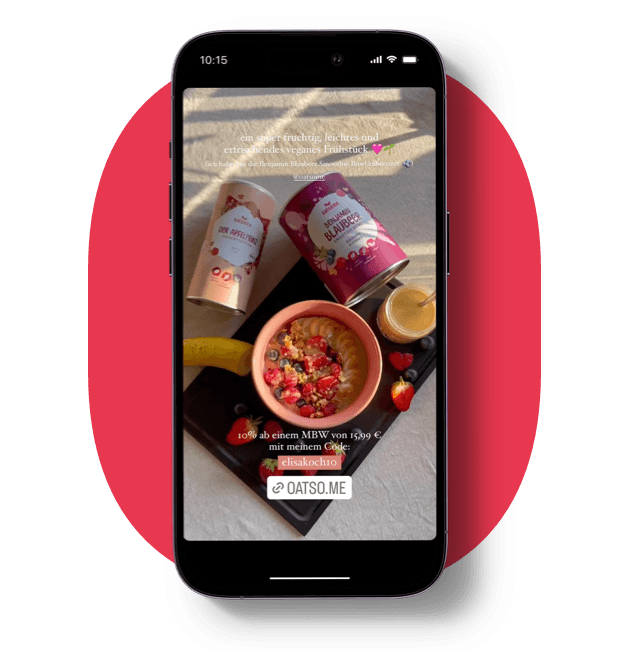
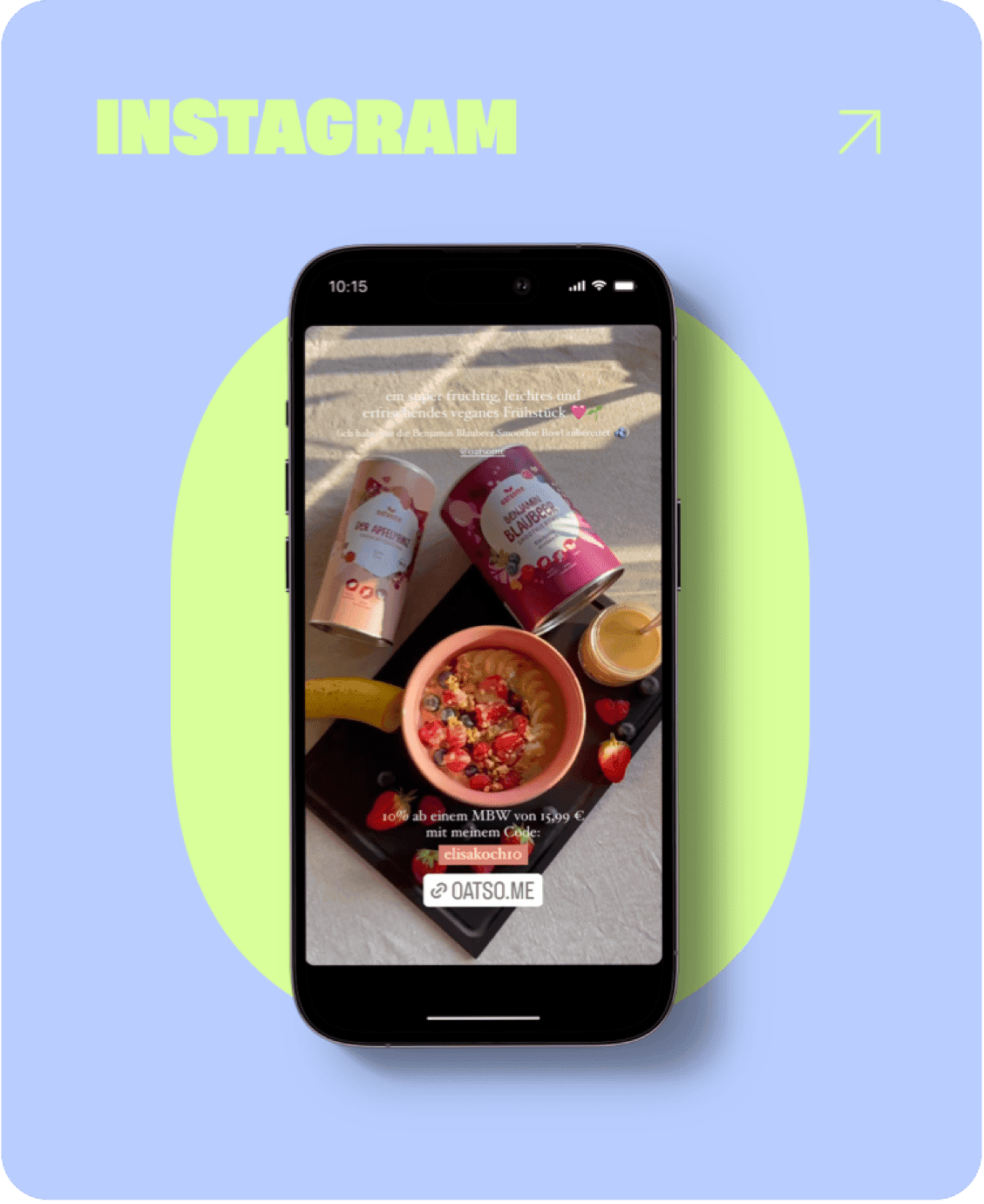
In Germany and across the DACH region, Instagram is one of the most important platforms for influencer marketing and is considered an all-rounder for visual storytelling. Through Stories, Reels, and carousels, you can contribute to awareness and performance goals, while the native shopping features significantly shorten the path from content to conversion. Instagram works particularly well for lifestyle, fashion, beauty, and food with a target audience between 18 and 45.

YouTube

The YouTube model works very differently from Instagram: the lifespan of videos is significantly longer, allowing them to generate organic traffic via search for months. This makes YouTube ideal for products that require explanation and have a higher basket value, as well as anything that benefits from detailed reviews. We were able to demonstrate the YouTube success model with Felix von der Laden and MagicHolz: just one placement generated more than 1,200 new customers.

VIDEO: https://www.youtube.com/watch?v=Nzn-4GM7Nl8

TikTok

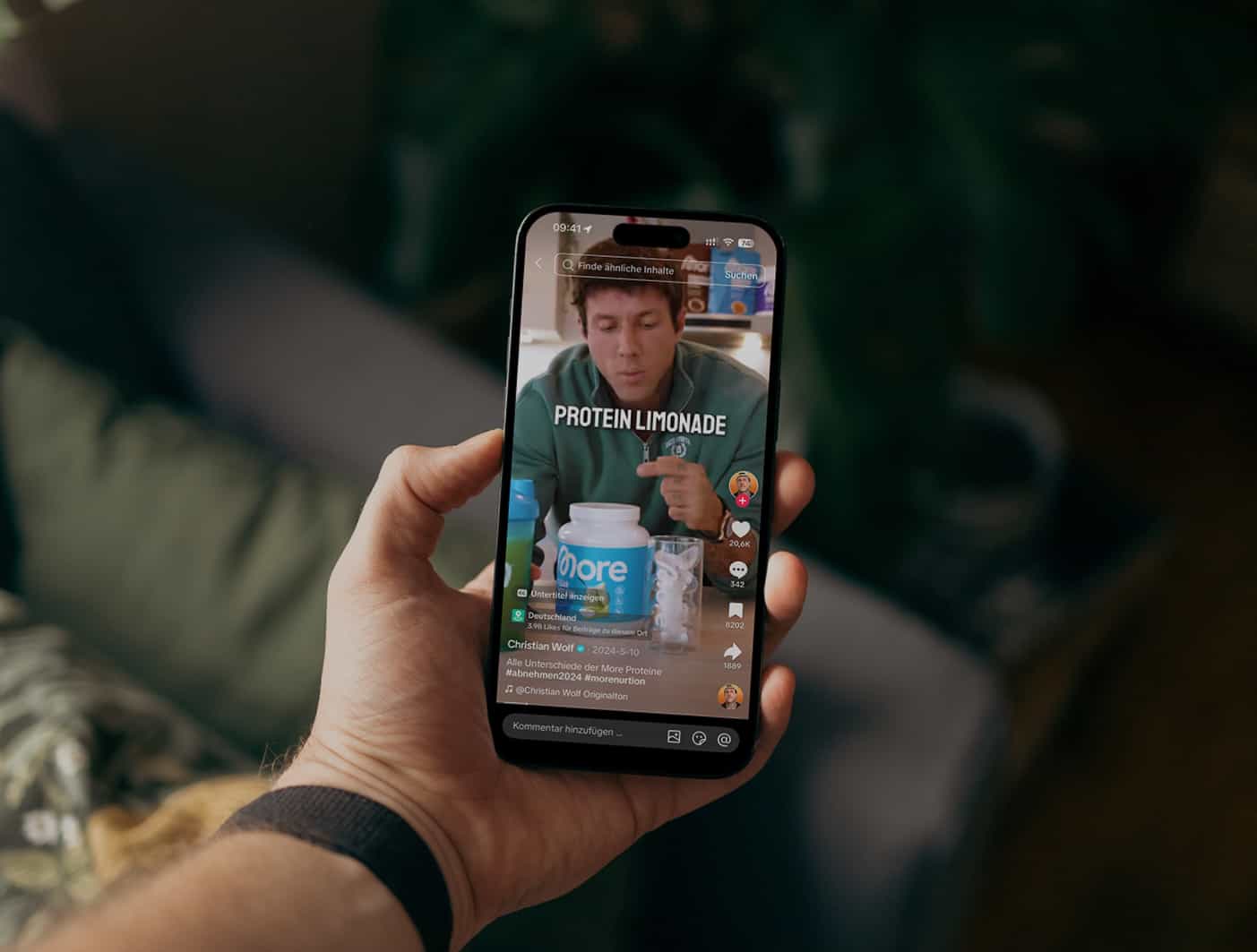
With TikTok, you primarily reach younger audiences aged 16 to 29 and, thanks to the FYP algorithm, have the best chances of organic reach and viral videos. The platform is particularly strong for short-term awareness peaks and trends; for long-term brand building, we recommend combining TikTok with Instagram or YouTube.

Twitch

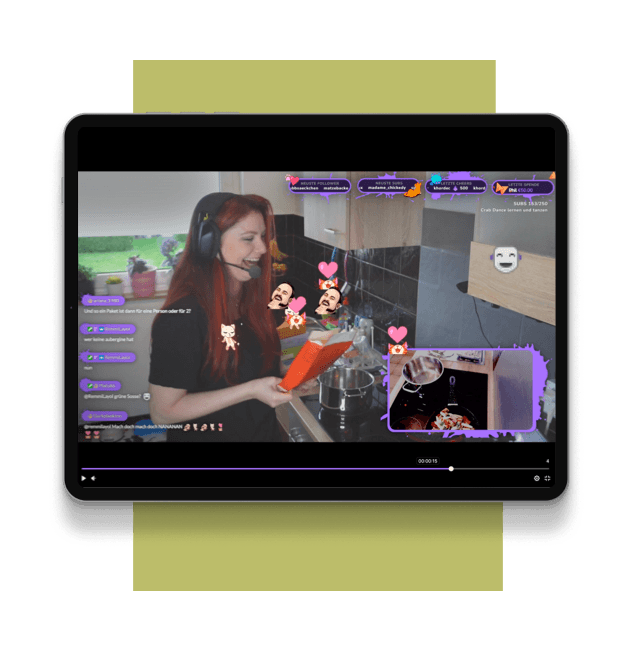
Twitch is considered the home of the gaming and tech community. Everything here revolves around live streaming, creating a special closeness between creator and audience. Recommendations from Twitch streamers are received like recommendations from friends, engagement rates are high, and conversion rates can rise to as much as 70 percent—not without reason, this channel is often underestimated.

Podcast

Influencer marketing via podcasts is one of the best audio channels in the DACH region. With host-read ads, you achieve levels of engagement that traditional ads could never deliver. After all, the recommendation comes from the host’s voice, which listeners already trust. Products that require explanation and higher-priced products are well suited for podcast influencers.

What Types of Influencers Are There?

Influencers no longer need to have hundreds of thousands of followers to be able to move your brand forward. Often, it is precisely the creators with just a few thousand followers who communicate your message particularly authentically. We usually distinguish between four different sizes.

TypeReachEngagement RateCost per PostBest Use
Nano1,000 - 10,0005 - 10 %50 - 300 EURLocal, test phases, authenticity
Micro10,000 - 100,0003 - 6 %300 - 3,000 EURSMEs, conversion (sweet spot)
Macro100,000 - 1 million1 - 3 %3,000 - 15,000 EURNational, awareness
Mega / Celebrity1 million +< 2 %15,000+ EURBrand launches, reach peaks
  • Nano influencers with 1,000 to 10,000 followers usually have the closest relationships with their followers. Their recommendations feel like tips from friends and are therefore especially valuable for local campaigns, niche products and test phases. Engagement rates of 5 to 10 percent at costs of only 50 to 300 euros per post are entirely possible in this category. Even small brands with limited budgets can get started with influencer marketing using nano influencers.

  • Micro influencers have between 10,000 and 100,000 followers and are a key part of many successful influencer strategies. Their niche is clearly defined, they have an engaged audience and they deliver measurable results at costs in the three- to four-figure range per post. For small and medium-sized brands, they are often the most efficient entry point, and for larger brands the best complement to reach campaigns with bigger creators.

  • Macro influencers with 100,000 to 1 million followers reach a broad target group with high ROI potential, as they are still active in a clear niche despite their large reach, for example in the food or fitness sector. Collaboration is usually more professional and formally structured than with smaller creators: approval loops and contracts are standard, and there is often management involved as well. In most cases, you should expect four- to five-figure amounts for a post.

  • Mega influencers or celebrities have more than one million followers and are ideal as brand faces and for major awareness campaigns or brand launches. Their recognizability and role-model function are unique, but you should expect correspondingly high costs. The high costs, a broad audience and comparatively low engagement rates mean that mega influencers work best as part of an integrated strategy, rather than as a standalone measure.

Ad Specialist Insights:

Engagement rates and brand fit are always more important than follower numbers. If a micro influencer is a perfect fit for your brand and has an engagement rate of 6 percent, your results will ultimately be better than with a macro influencer who only achieves 2 percent engagement in a broader target group.

How Much Does Influencer Marketing Cost? From One-Off Collaboration to Ambassador

The costs of influencer marketing vary significantly. Depending on follower count, platform, format and campaign duration, prices range from double digits to five figures per post. You can work with different compensation models.

ModelAdvantageDisadvantageWhen suitable
Pay-per-postPredictable, simpleNo performance incentivePure awareness campaigns
Performance-basedRisk is shiftedEstablished creators declineDirect response, affiliate
Hybrid (fixed fee + bonus)Both sides benefitMore complex to set upMedium- to long-term partnerships

The standard model is pay-per-post billing. You pay the creator a fixed amount per post. For pure awareness campaigns, this approach can make sense, although it lacks a performance incentive.

Performance-based models, on the other hand, shift the risk to the creator, who is paid depending on their results. This can be measured using affiliate links, discount codes and UTM parameters. However, established creators in particular are more likely to reject this approach because their risk is too high.

Many brands, creators and influencer agencies – ourselves included – therefore work primarily with hybrid models for longer-term partnerships. You pay the influencer a fixed base fee and also agree on bonuses depending on the performance of the campaign.

Figures for your budget planning: Ad Specialist Insights

If you are planning a test campaign with three to five micro influencers on Instagram, budget 5,000 to 15,000 euros for Reels, posts and Stories. If you want to set up campaigns across multiple platforms, working with ten to twenty creators is worthwhile. For this, you should plan between 30,000 and 100,000 euros. However, even more important than the total budget is how it is allocated. Our rule of thumb from numerous campaigns with e-commerce brands and start-ups is: 60 percent creator fees, 20 percent for paid amplification and 10 percent each for content rights and campaign management.

5 Elements of a Successful Influencer Marketing Strategy

A campaign that performs well doesn’t happen by chance. As an influencer agency, we have learned from over 10,000 campaigns with brands such as emma, HelloFresh and MagicHolz: Above all, it comes down to these five elements that make influencer marketing a successful channel.

  1. Clear target audience
    Before you book even a single creator, you need to know who you actually want to reach. Demographics such as age, location and gender are a starting point. However, interest-based targeting is even more important so that you can book influencers in the right niche.

  2. Influencers with brand fit
    Reach alone is not a mark of quality for a content creator. More important than reach are brand fit and community. Creator marketing agencies always also assess the community ratio, meaning the share of followers in your core target audience, the engagement pattern and the style of the content.

  3. Good briefing
    The briefing gives the creator guardrails with product USPs, tonality, dos and don’ts, while leaving them enough creative freedom for the content to remain authentic. Briefings that are too detailed take away what makes the creator unique.

  4. Define measurability
    You should always define KPIs before the campaign starts, not only when you want to evaluate the campaign. So that you can evaluate each campaign individually, you can work with UTM parameters and creator-specific promo codes.

  5. Long-term partnerships
    When an influencer repeatedly makes authentic recommendations, it truly builds trust. Ambassador programs and long-term partnerships with creators are therefore often the most cost-efficient choice.

How to build an influencer marketing strategy

Briefing in, campaign out, sales up? It’s usually not quite that simple. First, you need a clear strategy – whether you take your path with or without a marketing agency.

Step 1: Define the campaign goal

The first step is answering a simple question: What exactly should this campaign achieve? A launch needs different KPIs than a long-term awareness campaign or a seasonal conversion push. Define measurable goals and use them to determine which platform, format, and creator type are the best fit.

Ad Specialist Insights: What matters

  • Define your campaign goal in a way that can be clearly measured after 30 days. “More awareness” is not enough. You need specific KPI targets, such as a target CPM or a desired brand search uplift.

  • Clearly separate awareness and performance goals. If you optimize for both at the same time, you usually end up optimizing for nothing.

  • Use the goal definition to directly determine which platform and creator type are suitable. The strategy always follows the goal, not the trend.

Step 2: Sharpen your target audience

“Women between 25 and 45” is not yet a target audience, but merely an initial data point. The more precisely you know your potential buyers, the better you can manage your campaigns and select suitable creators.

Ad Specialist Insights: What matters

  • Your target audience determines the platform and creator selection.

  • You need information about interests, platform behavior, purchase decision factors, and content preferences.

  • Use your Google Analytics data, social media insights, and sales data to create a precise picture of your core target audience.

Step 3: Systematic creator research

Now the creator research begins. In addition to reach and engagement rate, check several questions: Does the community demographically match the target audience? How high is the community ratio? Is the account growing organically? Tools like HypeAuditor or Kolsquare can help you with the analysis.

Ad Specialist Insights: What matters

  • Always request up-to-date insight screenshots. Figures from the previous quarter say little about the current state of a community.

  • Check the community ratio. High reach with a low community ratio creates wasted reach.

  • Pay attention to consistency in the content. A creator who changes topics every four weeks rarely has a loyal niche community.

Step 4: Create the briefing & approval process

Now you can create the briefing. A good briefing always includes the campaign goal, product USPs, tone of voice, mandatory elements (e.g. disclosure notice), dos and don’ts, as well as the desired CTA. This is followed by the approval loop: the creator delivers a draft, you provide feedback, you do a maximum of two rounds, and after that the content should be ready.

Ad Specialist Insights: What matters

  • Keep the briefing to a maximum of one DIN A4 page. Anything longer either won’t be read by the creator in the first place or will make them feel too restricted.

  • Clearly define mandatory elements such as disclosure, key message, and CTA, but deliberately leave the execution open: the creator knows their community better than you do.

  • Plan for a maximum of two approval rounds and communicate this from the start. Too many loops slow down the process and cost the content its authenticity.

We’ve summarized even more information on how to brief influencers properly in our YouTube video.

VIDEO: https://www.youtube.com/watch?v=iBNWm30sihQ

Step 5: Execute the campaign

Monitoring also starts with the go-live. Take a close look at the first 24 hours: How is the community reacting? Are there questions, criticism, or enthusiastic comments? If necessary, you can intervene and steer things. But first give the content time to unfold. Algorithms favor organic engagement that builds over several days.

Ad Specialist Insights: What matters

  • You or the creator should promptly answer comments with questions about the product within the first 24 hours. This increases engagement and conversion.

  • Give the algorithm at least 48–72 hours before making decisions about paid amplification or content adjustments.

  • Screenshot all relevant metrics immediately after go-live. Some platforms display historical story data only for a limited time.

Step 6: Evaluate the campaign

Only carry out the final evaluation after at least 30 days. Conversions can continue to come in weeks after the placement, especially on YouTube or Twitch. Depending on the goal and platform, your reporting includes reach and impressions, engagement rate, CPM, conversion rate and ROAS, as well as brand search uplift. Ask yourself what you learned, which creators, formats, and platforms performed, and why. These insights are the foundation for the next campaign.

Ad Specialist Insights: What matters

  • Never carry out the final evaluation before 30 days. Post-click conversions and the brandformance effect often only become visible weeks after the placement.

  • Don’t compare creators only by reach, but by CPM and conversion rate. A smaller creator with a higher community ratio often beats the big name.

  • Document learnings in a structured way for each campaign. Which formats, platforms, and creator types performed, and why? This is your most valuable asset for the next campaign.

How do you find the right influencer for your campaigns?

There are now many content creators. You face the challenge of separating quality from quantity. There are several ways you can do this.

  • Hashtags & keywords: Search directly for your topics on the relevant platforms. Which creators keep appearing in your niche? Who regularly publishes high-quality content on your topics?

  • Influencer search tools: Using platforms like HypeAuditor or Kolsquare, you can search based on data for community quality, engagement rate, and target audience demographics. They also help you identify fake followers, saving you budget on creators who don’t deliver.

  • Competitor analysis: Look at which creators your direct competitors work with and how the campaigns performed. This gives you an initial reference point for your own creator pool.

  • Influencer agencies: A specialized influencer marketing agency brings its own creator network, which it has built and maintained over the years. This speeds up the process for you, automatically reduces wasted reach, and means you work with reliable data instead of gut feeling.

Ad specialist tip: Always keep an eye on CPM

The cost per mille (CPM) is your metric for efficiency when selecting suitable creators. Simply divide the cost of a placement by the expected reach (in thousands) and compare creators on this basis. A lower CPM with a high community ratio is almost always the better choice than a big name with wasted reach.

Measuring success in influencer marketing: These KPIs should be considered

Without clear KPIs, you can’t evaluate influencer marketing. Depending on the campaign goal, there are various metrics you should keep an eye on.

Awareness KPIs

Awareness KPIs show you how much more visible your brand has become through a campaign. You can measure

  • reach

  • impressions

  • views

  • CPM

  • brand search uplift

Brand search uplift in particular reveals a lot: Increasing search queries around your brand after a campaign are a clear sign that your message is getting through.

Engagement KPIs

How do people perceive your campaigns? How do they respond to them? Various KPIs provide insight into these questions:

  • engagement rate

  • comment quality

  • saves

  • shares

  • click-through rate

Always put the engagement rate in the context of the influencer. If the target audience is a good fit, a micro-influencer with a 4 percent engagement rate beats a macro-influencer with a rate of 1.2 percent because the fit is better.

Conversion KPIs

Which influencers and campaigns ultimately actually drive sales and traffic? These KPIs provide insight:

  • clicks

  • leads

  • conversion rate

  • cost per click

  • cost per acquisition

To measure reliably here, you need individual tracking links, UTM parameters, and discount codes. This is the only way to know who, and which posts, delivered which results.

How to calculate return on investment

To find out how high your ROI is — that is, your profit in relation to the budget used — you can use a simple formula. If you subtract the campaign costs from the revenue, you get your profit. Divide that by the campaign costs. So if you made a profit of 6,000 euros and invested 1,000 euros, this results in an ROI of 6:1. That is exactly the average ROI in influencer marketing. For every euro invested, you make 6 euros in profit — so the investment is worthwhile.

Influencer marketing is constantly evolving. There are a few trends you should definitely keep an eye on. We expect them to play an increasingly important role in the coming years.

Micro and Nano Influencers

Deals with mega influencers and celebrities are still being closed. For smaller brands and start-ups in particular, however, smaller creators are increasingly taking center stage. Micro and nano influencers bring engaged communities with them, have lower CPMs, and are especially authentic and valued in their niche. Brands like MagicHolz have shown us that targeted creator collaborations can work without a huge budget: within six months, they generated over one million in revenue.

AI in Creator Matching and Content

AI tools can support you in selecting suitable influencers. They analyze audience overlap, engagement quality, performance patterns, and detect fake followers. This reduces your manual research effort, but the important question of brand fit and creative quality still lies with you. Virtual influencers are also becoming increasingly significant. These are AI-generated characters with their own social media profiles. Your advantage is maximum control over their appearance and messaging, but the human authenticity factor is missing.

Performance Influencer Marketing

Influencers have long since stopped being associated only with awareness, even if this prejudice persists. TikTok Spark Ads and Instagram Partnership Ads, for example, allow you to use creator content with precise targeting and budget control. In other words, you combine the authenticity of influencer content with the scalability of paid media. At Ad Specialist, we go one step further and think about awareness and performance together in campaigns with our unique brandformance approach: we are seeing the boundaries between awareness and performance campaigns increasingly disappear. Content that creates awareness today delivers measurable performance tomorrow. We take this into account in every one of our campaigns.

Client slider?

When You Need an Influencer Marketing Agency

Of course, you can build your influencer marketing in-house. However, you need to be prepared to familiarize yourself with the topic and negotiate with creators yourself, create contracts and briefings, coordinate approvals, and set up tracking and reporting. The advantages of working with an influencer marketing agency quickly become apparent, at the latest when coordinating multiple campaigns:

  • Established agencies have direct relationships with creators and management. For you, this means faster response times and often better terms.

  • A creator marketing agency has already managed hundreds of campaigns and therefore knows the risks, sweet spots, and usually optimizes more effectively.

  • The existing infrastructure for tracking, reporting, and management saves you a lot of time and costs for the respective tools.

At Ad Specialist, we work in a data-driven way and measure every single campaign against clear KPIs. You will never hear “that feels worthwhile” from us. Instead, you receive presentations and sheets with real numbers that show how we made YouTube the most profitable sales channel for brands like Duschbrocken and were able to reduce CAC from 60 to 25 euros. You can also watch the success story on YouTube.

VIDEO: https://www.youtube.com/watch?v=R5A9yhalWI8

4 Common Pitfalls in Influencer Campaigns and How to Avoid Them

As an influencer marketing agency, we repeatedly see patterns that can slow down campaigns and reduce results. To help you avoid them from the outset, we have compiled the most common mistakes for you.

  • Creator selection: If you select creators based only on follower count, that does not say much about the potential success of the collaboration. Be sure to also check brand fit, community quality, and engagement rates. An account with 500,000 followers and 0.5 percent engagement is worth less to you than one with 30,000 followers and 6 percent engagement if the target audience is right.

  • Tracking: We repeatedly see evaluations carried out too early, missing tracking links, or no campaign tracking at all. Define before launch what you will consider a success after 30 days, set up clean UTM parameters and discount codes, and take the platform into account as well. On YouTube, conversions sometimes continue for months afterward.

  • Briefing: Again and again, there are briefings that are too vague or too detailed and therefore restrictive. If you provide too few guidelines, the content may not fit your brand. If you control too much, you take away the creator’s creative freedom, and their content ends up looking like an advertisement. Provide information on goals, tonality, and mandatory content, and trust the creator with the rest—they know their audience best.

  • Collaborations: If you work with an influencer only for a story mention or a short YouTube placement, you are probably leaving potential untapped. The more often a creator mentions and recommends your brand, the more trust increases and important social proof is created. Long-term partnerships with influencers who have a good brand fit usually deliver the most.

  • Paid boost: On most platforms, organic reach alone is no longer enough. We work according to the principle of always planning 20 to 30 percent of the campaign budget for paid amplifications.

Conclusion: Influencer marketing is changing – use 2026 for your brand!

Influencer marketing has grown up. For many years, it was considered a supplementary marketing channel and was sometimes still ridiculed. It is now a fixed component in numerous companies as a measurable and scalable growth channel. However, you absolutely need a clear strategy, creators who fit your brand, KPIs that genuinely say something, and well-thought-out briefings that provide guidelines while still leaving room for creative freedom. If you implement your strategy consistently, nothing will stand in the way of greater reach and performance.

Do you want to set up your next campaign strategically or get started with influencer marketing in general? As an influencer marketing agency, Ad Specialist supports you from creator selection through to final reporting. Use our experience from over 10,000 campaigns for your brand too!

Frequently Asked Questions & Answers About Influencer Marketing

What advantages do influencer marketing agencies offer compared to DIY campaigns?

An influencer marketing agency like Ad Specialist brings three things that are difficult to build internally: experience from thousands of campaigns, negotiating power for creator fees, and a proven tracking setup. DIY campaigns primarily cost one thing: time and a budget for mistakes. Anyone who learns the first mistakes themselves pays for them with wasted advertising budget. Anyone who starts with an agency benefits directly from reliable data and valid learnings.

Which tools help analyze influencer reach and engagement?

HypeAuditor detects fake followers and objectively analyzes the quality of a community. Kolsquare provides reach, engagement, and demographic data per creator. YouTube Studio and Instagram Insights provide raw data directly from the platform. Always have these screenshots shown to you before booking. Ultimately, however, the most important tool is to evaluate data consistently instead of jumping to conclusions after three days.

What are successful influencer marketing strategies for small businesses?

Start small, track properly, and only scale what works. Micro and nano influencers are often more profitable for small brands than large creators: they cost less, have more engaged communities, and enable real storytelling. Magic Holz, as an unknown brand with no influencer experience, generated over one million euros in revenue within six months using this approach. It is not the budget that decides, but the strategy behind it.

Which social media channels are suitable for brand collaborations?

YouTube is best suited for products that require explanation and have a higher cart value, Instagram for visual branding and quick reach, TikTok for awareness among young target groups. Twitch is strong for gaming and tech, podcasts for premium and B2B target groups. What matters is that you do not choose channels based on trends, but based on where your target audience is active and which format fits your product and your conversion goals.

How can I measure the success of an influencer marketing campaign?

This works with creator-specific promo codes and UTM links that make each collaboration individually attributable. The most important KPIs are CAC, ROAS, conversion rate, and new customer share. Track for at least 30 days, as conversions can continue to come in for weeks after the placement. If you evaluate after three days, you underestimate the actual performance. Anyone who works this way can turn influencer marketing into a scalable growth channel.

Moritz Lambrecht

About the author

Moritz ist Experte für datengetriebenes Influencer Marketing sowie Co-Founder und CEO der Influencer-Marketing-Agentur Ad Specialist.

Learn more about Moritz
  • Or follow me on:
  • Instagram Icon
  • LinkedIn Icon
  • YouTube Icon

Send an email 📩

Illustration of a creator with social media performance data

Next Post

Instagram Plus: Why the new 48-hour story window is a real opportunity for e-com brands

You might also be interested in