
Print advertising 2025
Offline marketing

Print advertising 2025: Why it still counts & how to use it smartly

Print is far from dead – on the contrary! It offers companies a powerful opportunity to stand out in the flood of digital advertising and reach targeted customers. In this article you will find out which brands particularly benefit from print marketing, how you can cleverly combine offline and online marketing and which trends will be important in 2025.

Reading time: approx. 6 minutes
Moritz Lambrecht
Moritz Lambrecht
February 27, 2025

Definition

What is print advertising?

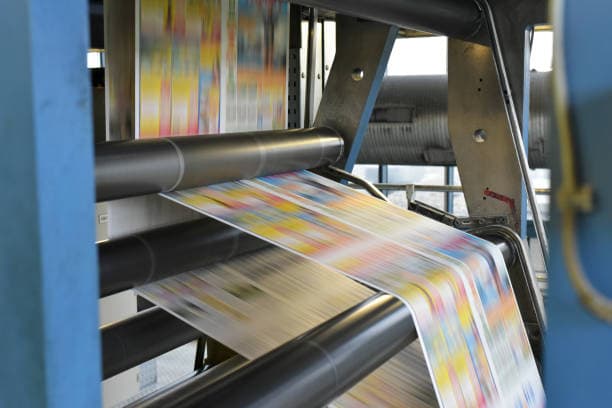
Print advertising includes all printed advertising measures that appear in newspapers, package inserts, flyers, brochures, posters or print mailings. It is one of the oldest forms of advertising and offers companies the opportunity to communicate their messages specifically to relevant target groups. Despite digitalization, print advertising remains an important part of the marketing mix. Print advertising offers numerous benefits, including the ability to combine visual and tactile elements to capture readers' attention. Printed materials can be designed to be emotionally appealing and enable complex information to be presented in a clear and structured manner. In addition, print advertising is often remembered for longer, as many people find printed materials more tangible and trustworthy than digital advertising.

components

What’s involved in print advertising?

Print advertising can be divided into different categories:

  • Advertising: Placement of advertisements in newspapers and magazines.
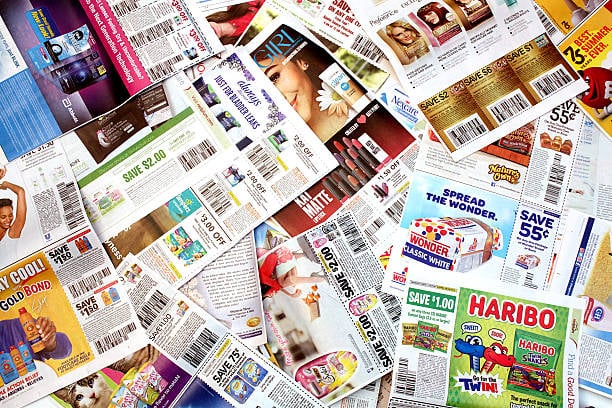
  • Print mailings: Personalized advertising mail such as flyers, vouchers or catalogs.
  • Out-of-Home (OOH) advertising: posters, city light posters, advertising pillars or billboards.
  • Package inserts and catalogs: Print products that are included with an order or newspaper.
Print advertising design 2025

Advantages

Advantages of print advertising

Print media offers a variety of advantages that set it apart from digital advertising measures:

  1. High Credibility: Print advertising is often more trusted than digital advertising because it is less intrusive.
  2. Haptic perception: Due to the physical experience, print advertising stays in the memory longer than digital ads.
  3. Target group accuracy: Specific magazines and regional newspapers offer a targeted approach.
  4. Longer attention span: Printed content is often consumed more intensively than online advertising.
  5. High reach in certain target groups: Older target groups or specialist audiences often prefer printed media.

Disadvantages

Disadvantages of print advertising

  1. Difficult to measure success – Unlike online marketing, conversions are harder to track.
  2. High Production Costs – Printing, distribution and placement in magazines or newspapers can be costly.
  3. No real-time optimization - Once printed, errors cannot be corrected or content adjusted.
  4. Limited Reach – While online advertising can scale globally, print is often limited to specific regions.
  5. Longer lead time – Print materials such as package inserts take more time to produce than digital campaigns.
Coupons bei Printwerbung

Potential

Why is print advertising underrated?

Many companies focus exclusively on digital marketing channels and underestimate the potential of print advertising. Classic media in combination with online campaigns can increase brand awareness and positively influence purchasing decisions. Through targeted placement in relevant print media, customers who are difficult to acquire online can be reached. While online advertising is often overlooked or ignored, a well-designed print ad can capture attention and create an emotional connection with the reader. Physical elements, such as the texture of the paper or special printing techniques, can further enrich the user experience and reinforce the message. Last but not least, print advertising also offers the opportunity to use creative formats that cannot be implemented in the digital space. Whether it's unusual folding techniques, special formats or the integration of QR codes - print can surprise and delight in a variety of ways.

Target groups & industries

Which companies benefit from print advertising?

  • Local Businesses: Local newspaper advertisements or on-site billboards are effective ways to reach customers in the area.
  • Luxury and premium brands: High-quality print products convey exclusivity and quality.
  • B2B companies: Trade magazines and industry magazines are important advertising platforms in the B2B sector.
  • D2C and e-commerce brands: Print mailings, catalogs or package inserts can acquire new customers and reactivate existing customers.
Offline vs Online Werbung

Multichannel mix

Connect offline and online: multichannel mix

A successful marketing strategy combines print and digital advertising to exploit synergy effects. Here are some ways print advertising can be seamlessly integrated into digital campaigns:

  • QR codes & personalized URLs: Printed ads with QR codes or individual links direct readers directly to landing pages, where success can be measured.
  • Social Media Hashtags & Campaigns: An ad can contain hashtags or social media references to encourage users to interact on digital platforms.
  • Print as a traffic booster for e-commerce: Print mailings with voucher codes or discount campaigns attract users to the online shop.
  • Retargeting & Cross-Channel Strategies: Print can address potential customers who will later be picked up again through targeted digital retargeting ads.
  • Push print ads in digital media: A strong campaign can be reinforced with social ads, newsletters or display advertising.

A successful example of a multichannel strategy is a fashion brand that sends exclusive lookbooks to regular customers and uses personalized QR codes to provide a landing page with additional information or special online discounts. Here the print content is used as a springboard for digital interactions.

Costs

Costs of print advertising

The costs for print advertising vary depending on the format, circulation and distribution. Here is a rough overview:

  • Flyers & Package Inserts: Cheap to produce (from €0.05 per piece for larger runs), but distribution costs can vary depending on the strategy.
  • Print ads in newspapers & magazines: Depending on reach and placement. Small advertisements start at a few hundred euros, while a double-page spread in a large daily newspaper can cost several thousand euros.
  • Posters & Outdoor Advertising: Costs depend heavily on the location. A City Light poster in a busy pedestrian zone costs from around €500 per month.
  • Printmailings: In addition to the printing costs (approx. €0.30 per letter), there are shipping costs. However, mass mailings can be made cheaper through postal discounts.

Although print advertising has higher fixed costs than digital ads, it can achieve high effectiveness through targeted placement and a strong connection to online marketing.

Costs of print advertising
  1. Sustainability and environmentally friendly printing processes: Recycled materials and climate-neutral printing are becoming increasingly important.
  2. Augmented Reality in Print Media: Interactive ads that display augmented content via smartphones.
  3. Personalized direct mailings: AI-supported data analysis makes print campaigns even more targeted.
  4. Cross-media connection: Companies are increasingly relying on the integration of print and digital strategies.
  5. Higher value of print materials: High-quality designs and innovative formats increase the attractiveness of print advertisements.

Conclusion

Print advertising is a powerful addition to digital marketing and offers companies a wide range of options for reaching target groups. Sustainable success can be achieved through clever combinations of online and offline measures. Anyone who relies on a balanced multichannel mix in 2025 will benefit from the greater credibility and reach of print advertising. It makes it possible to convey emotions and stories in a tangible way that are often lost in the digital space.

At a time when consumers are faced with a barrage of online ads every day, a targeted print campaign can grab attention and leave a lasting impression.

To realize the full potential of print, businesses should consider some proven strategies. This includes the targeted selection of printed products such as package inserts that are tailored to the respective target groups, as well as the integration of QR codes or links to link the offline experience with the online world.

Companies that capitalize on the synergies between print and digital at an early stage are well prepared for the challenges and opportunities of the future.

Frequently asked questions and answers about print advertising

Moritz Lambrecht

About the author

Moritz is an expert in data-driven influencer marketing as well as co-founder and CEO of the influencer marketing agency Ad Specialist. Together with his team, he has already implemented over 10,000 influencer campaigns and managed more than €50 million in advertising budgets for customers such as HelloFresh, Emma, ​​Clark, mymuesli and many other well-known e-commerce companies. His focus is on helping e-commerce companies grow profitably through creative and measurable influencer marketing strategies on channels such as YouTube, Instagram and Twitch.

Through his performance-oriented and effective approach, he has built a reputation as a leading expert and speaker in German e-commerce. In this blog - as well as on LinkedIn and his YouTube channel - he regularly shares valuable insights about data-driven influencer marketing.

Learn more about Moritz
  • Or follow me on:
  • Instagram Icon
  • LinkedIn Icon
  • YouTube Icon

Send an email 📩

Strategy for acquiring new customers

Next Post

Acquiring new customers through marketing 2025: The ideal strategy

You might also be interested in